
Dublin’s Contribution to Early SFF
Today is the 300th anniversary of one of the most important books in English literature – Gulliver’s Travels. One of the earliest books that can be considered a modern novel, a library’s worth of literary and political analysis has been written on this book; it is seen as a biting work of political satire and is widely referred to as a proto-science fiction work, much like Shelley’s Frankenstein. That last part will be what interests those of us interested in speculative fiction; there is a lot here to celebrate.
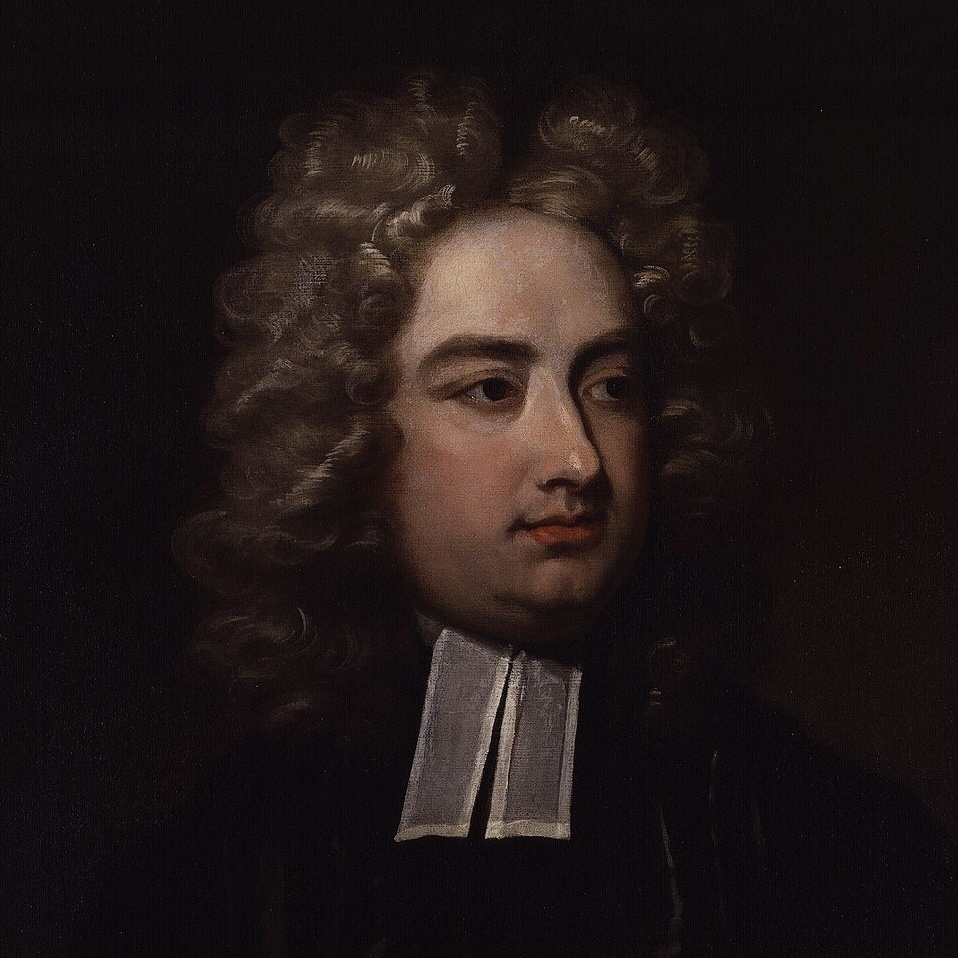
Jonathan Swift was born on 30 November 1667 in Dublin in what was then the Kingdom of Ireland. He was the son of Jonathan Swift and his wife Abigail Erick (or Herrick) who came to Ireland after their families’ misfortunes in the English Civil War, part of the wider Wars of the Three Kingdoms. Jonathan Swift fil was appointed Dean of St Patrick’s (Anglican) Cathedral in Dublin in 1713, leading to his title of Dean Swift. With works such as A Tale of a Tub (1704) and A Modest Proposal (1729), he established a style of deadpan satire that came to be known as Swiftian.
Naturally, for our purposes as SFF people, I am going to concentrate on the fantastical elements of the story of Gulliver and how they anticipate many of the tropes we see in speculative fiction. I must say at the start that I was surprised at how much of this there is; it certainly satisfies one of the elements of my own personal definition of a good SF story in that removal of the speculative or fantastical elements would render the story incomplete.
The worlds Swift imagined began as a basis for satire, a use to which this kind of wild speculation is still put today. It often has the advantage of escaping the censors’ red pen and can keep the writer out of a jail cell. Having said that, many of the speculative questions he asked are still familiar to readers of SFF today: What happens when humans encounter beings unlike themselves? What does a society look like when its scale, values or technology are radically different from ours? Can science improve the world, or can it become absurd when divorced from implementation? What exactly would longevity or immortality look like? We will take a voyage through the four parts of the book and see what Swift has to say on the matter.
Part I: A Voyage to Lilliput
During his first voyage, Gulliver’s boat is shipwrecked and he is washed ashore on an uncharted island. There he encounters, in one of the most iconic images from the book, a race of tiny people. These are the inhabitants of the island country of Lilliput and are less than 15 cm tall (6 inches in old money). Gulliver is given a residence in Lilliput and becomes a favourite of the Lilliput Royal Court. He is also given permission by the King of Lilliput to go around the city on the condition that he must not hurt their subjects; although they are hospitable to Gulliver, the Lilliputians are leery of the danger for them of his enormous size.
Gulliver learns, as he wanders around this country, that the Lilliputians put great emphasis on small, absurd or trivial issues. In a famous example, a major political quarrel starts over which end of an egg a person should strike first when removing the shell. Software Engineers may see in this the origin of the terms big-endian and little-endian in computing, but the less said about this the better.
Gulliver repays the hospitality of the Lilliputians by joining them in a war against the rival island nation of Blefuscu; in possibly the second most iconic scene from the book, he drags off the entire fleet of the Blefuscu navy, thus ensuring victory for Lilliput. However, he then refuses to help the Lilliputians annex Blefuscu, leading to a rift with the King and royal court. Relations between them deteriorate further when Gulliver urinates on a house in the capital to put out a fire. He is convicted of treason, but escapes to Blefuscu with the help of a friend. Here, he finds an abandoned boat and sails out to be rescued by a passing ship, which takes him back home safe and sound.
It is worth noting here that, while some scholars have attributed the inspiration for the Lilliputians to stories of the ‘little people’, that is, the diminutive magical folk that appear in the folklore of Ireland and beyond, there is nothing magical about the Lilliputians. They are identical to us in everything but scale.
For me, this chapter is a precursor to the many SF stories where a character who is ordinary in one setting, becomes extraordinary in another, alien setting. While size might not be the changing characteristic, as Swift did it to such good effect 200 years ago, we often see species from high gravity planets appear incredibly strong in lower gravity environments (including ourselves). This idea was especially strong in graphic novels, TV science fiction and the written SF of the 50s and before. A poignant example was recently served up to us in the Project Hail Mary book and film, where the rescue efforts between Ryland Grace and the being he names Rocky are hampered by how physically hot Rocky is to Grace. Possibly the most extreme versions are settings like that of Raft, by Stephen Baxter, where humans of a sort live in a world with a radically different gravitational constant, or Robert Forward’s Dragon’s Egg, with entities living on the surface of a neutron star.
It should go without saying that I am not comparing the entertaining humour of PHM to the foundational satire of Gulliver’s Travels; my aim is simply to show how the ideas have persisted. But differences brought about by the change of environment anticipates a change of perspective and analysis, which opens the door to an ocean of speculative fiction satire.
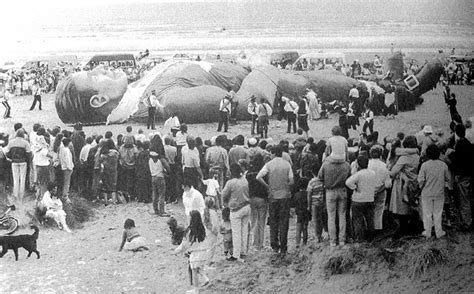
On a more celebratory note, this scene was enacted on a grand scale in 1988, the year the City of Dublin celebrated its Millennium anniversary. During July of that year, a giant body was found on Dollymount strand… The story was covered by RTÉ.
Part II: A Voyage to Brobdingnag
On his next voyage, Gulliver is abandoned by his shipmates on a peninsula on the western coast of North America. He immediately notices that the grass of this new land is as tall as a tree – he is in Brobdingnag, the land of the giants.
Gulliver first meets a farmer who is 22 metres tall (72 feet). The farmer brings Gulliver home to his family, who are astounded by Gulliver’s small size. He gives his daughter Glumdalclitch the job of looking after Gulliver, who is exhibited for money. This eventually leads to Gulliver becoming ill, so the farmer sells him to the queen of Brobdingnag. Glumdalclitch is taken into the queen’s service to take care of Gulliver, while the queen commissions a small house in which he can be carried around; this is referred to as Gulliver’s ‘travelling box’.
The most memorable threads of Gulliver’s sojourn in Brobdingnag are his fights with giant wasps and being carried to the roof of the palace by a monkey. In between this carry on, he discusses the state of European politics and war with the King. The latter is puzzled with what he learns from Gulliver about Europe, especially the use of guns and cannon. But finally, at the beach, Gulliver’s traveling box is grabbed by an eagle which flies off until it drops the box into the sea. He is rescued by sailors who bring him back to England.
Here again we see the science fictional elements – there is nothing magical about any of the goings on in this part of the story and again we see the trope of an individual’s relationship to his surrounds influenced by their being out of context. At the risk of stating the obvious, Swift plays clever by having this second chapter of Gulliver-out-of-context be the converse of the first one. And again, the literal and figurative changes of perspective allow for satire and analysis of Swift’s own time and place.
Part III: A Voyage to Laputa, Balnibarbi, Luggnagg, Glubbdubdrib and Japan
In a triumph of optimism over experience, the bould Lemuel sets of on a third voyage, this time to have his ship attacked by pirates and he marooned near India. He is then rescued by the flying island of Laputa. This state is a contradiction; one the one hand, the residents of the island devote their time to music, mathematics and astronomy but are unable to use them for practical ends. Yet despite this, they rule harshly over a subject territory called Balnibarbi. Despite the lack of application of their sciences, they have an effective method of subjugation; they bombard rebellious cities and towns with rocks.
Gulliver tours Balnibarbi and sees how the lack of application of science leaves the people there destitute; the Grand Academy of Lagado in Balnibarbi devotes huge resources to extract sunbeams from cucumbers, to soften marble for use in pillows, to mix paint by smell alone and to foil political conspiracies by examining the excrement of suspects. This can be understood as a dig at the Royal Society of Swift’s time, much of whose work he thought ridiculous, but it is also a statement or position in a debate over blue-sky versus applied research.
Gulliver decides to leave for Japan; while waiting on a boat, he visits Glubbdubdrib, where he meets a magician who facilitates conversations with long-dead philosophers and rulers. On the nearby island of Luggnagg, he meets a people called the Struldbrugs who have a particular form of immortality where they still age and become quite infirm as do we. They are considered legally dead at the age of eighty.
Here we have several ideas that have come back around in science fiction to this day. The dominance of Laputo over Balnibarbi by virtue of its elevated position is a simple idea, but its legacy can be seen in discussions of orbital platforms and the militarisation of space. The position of the Struldbrugs and their variety of immortality is one of the earliest examinations of the idea of physical longevity that does not assume permanent health nor improving social position. Writers from Brian Aldiss to Roger Zelazny have written stories and novels on this topic, possibly stemming from these few paragraphs in Gulliver’s Travels.
Part IV: A Voyage to the Land of the Houyhnhnms
Despite his very understandable intention of staying in England, in the final part of the novel Gulliver becomes bored with his work as a surgeon, so takes to sea again as the captain of a merchantman. Yet again, to an extent that we begin to wonder if he is himself the problem here, his crew mutinies, casting him adrift in a boat. He arrives at yet another land where things are radically different to England. There are two species of note here; one are a humanoid race who act in violent and ‘savage’ ways, the other a race of sentient and civilised horses. Gulliver despises the former, the Yahoos, and comes to greatly admire the latter, the Houyhnhnms. Such is the impact of this visit that Gulliver comes to regard his own species as essentially Yahoos with a veneer of reason and thought, but where these abilities serve ends no different from those of the savage Yahoos. Ironically, or perhaps appropriately, the Houyhnhnms come to regard Gulliver himself in the same light. They eventually regard this as a danger to their own way of life and request that Gulliver leave. The head of the Houyhnhnm household that had put up Gulliver during his stay delays the implementation of this exile so that Gulliver can build a canoe. He is eventually rescued by a Portuguese ship; Gulliver refuses their help at first, due to his contempt for humans as Yahoos, but must eventually admit that the Captain is a courteous and generous man of no little wisdom.
The influence on speculative fiction is clearest of all in this last of Gulliver’s Voyages. Many SFF works deal with versions of humanity that are similar but different to ourselves, from The Island of Doctor Moreau to Do Androids Dream of Electric Sheep? and Service Model. The alternate humans depicted may have the same physical appearance but with radically different behaviours or thinking, or conversely they may be versions of ourselves with similar sentience but radically altered bodies. These speculations invariably reflect back on who we are and how we are influenced by our biology, with the true meaning of humanity at issue. At the end of this Voyage and of the book, Gulliver returns to his home in England tormented by these thoughts and becomes a recluse, avoiding the company of the Yahoos around him. He stays on his own estate, a stranger to his family, spending several hours a day speaking with the horses in his stables. Sadly they do not respond.
Celebrations!
Three centuries after Gulliver first set sail, his voyages remain familiar to readers of speculative fiction. Civilisations born in different environments, flying habitats, strange technologies and radically different forms of intelligence are now staples of the genre. This landmark piece about a journey into the unknown and the wonders encountered there feels like an appropriate legacy in the run up to a WorldCon in Dublin.
If you are here towards the end of October of 2026, both St Patrick’s Cathedral and Trinity College, Dublin are marking the 300th anniversary with events and activities. But if you can’t make these celebrations, or just want to focus on that proto-science fiction, we’ll see you in Dublin in August 2029!