
Just on the off chance that you have never heard of Ireland and don’t know anything about it, here are some basic facts about us and about Dublin City itself to get you started. Needless to say there is a clatter of history and politics behind all this, which I will earnestly avoid. What I want to do here is let you know some early practicalities for your visit. More will follow in this blog. Much more!
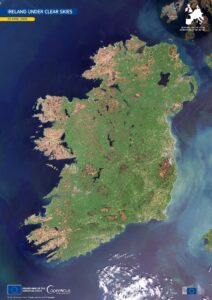
Ireland is a teddy-bear-shaped island on the western edge of Europe, in the North Eastern Atlantic Ocean. This explains the weather; our position gives us a mild, maritime climate. Other parts of the world claim to get all four seasons in a day; we are the world leaders in this. Dublin City is notably positioned on exactly the driest spot on the island, so the rain doesn’t deluge down here quite as much as elsewhere.
The state that is now the Irish Republic has been independent since 1922, when it separated from the United Kingdom, while remaining a dominion within the British Commonwealth. We declared a Republic in 1949, thereby leaving the Commonwealth. However, we have had a President since 1937, as a side effect of the abdication of Edward VIII of the UK (yes, that Edward VIII!)
We are members of the European Union and of the Eurozone, so visitors from Finland to Faro will not need to change currency, nor will they need any visas. We are not, however, members of the Schengen area. Travellers from Britain will not be able to spend their Pound Sterling here; it will not be accepted in shops. I mention this because, although we are as quick to tap our bank cards as anyone else in the world, cash is still popular here. Ireland and the UK have a Common Travel Area, so despite their departure from the EU, no visa is required for British visitors.
The dominant language in Ireland is English. The other most important language, from a cultural point of view, is the Irish language, also known as Gaelic or Irish Gaelic. You will see it everywhere due to its status in our Constitution as the First Official Language, with English as the second. We will have a lot to say about Irish in future posts, gan amhras (this means ‘without a doubt’).
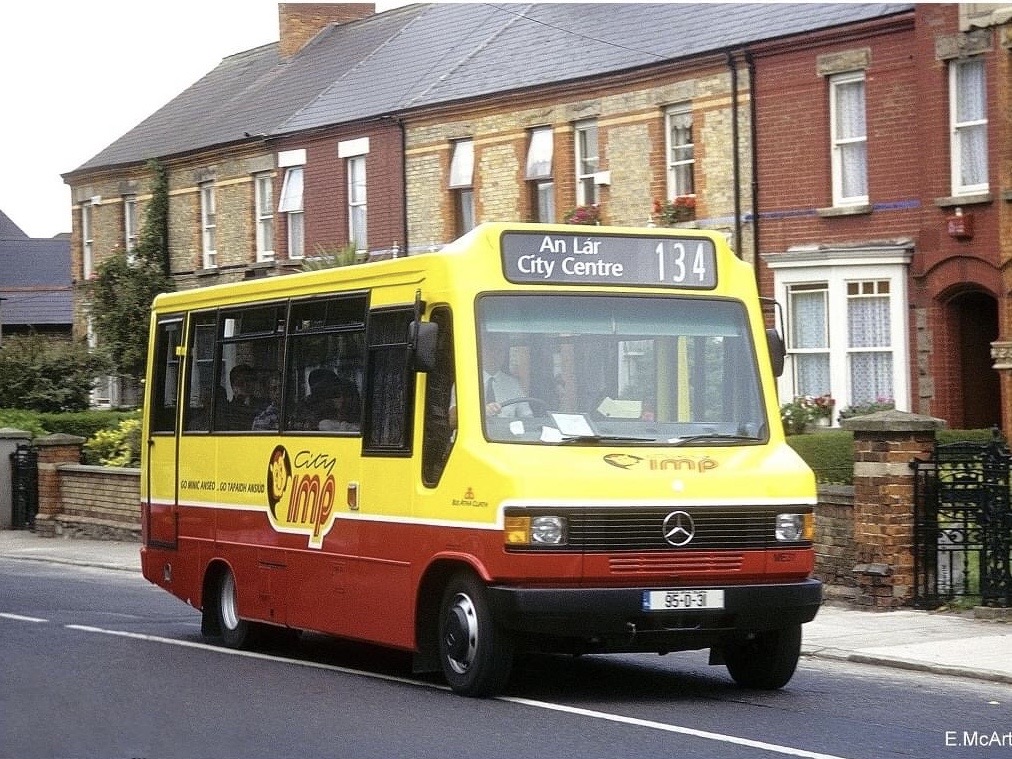
While there are many other languages spoken here, both ancient and recent, what you will mostly be dealing with during your stay is Hiberno-English, our variant of the English language. You may encounter anything from a strong local accent to a string of vocabulary or phrases that bear little resemblance to your version of English. It is also true that those raised in Ireland tend to speak rather quickly. But do not be alarmed, we can speak standard English as well as the next anglophone. The history of language in Ireland is hugely interesting and it’s another subject that we will return to many times.
Dublin is a very diverse city and has many well-established communities from around the world, amongst our population of well over a million people. So if you are talking to someone in a shop, pub or hotel, it might happen that they speak your language! This is especially true if you speak Chinese, Polish, Portuguese or French.
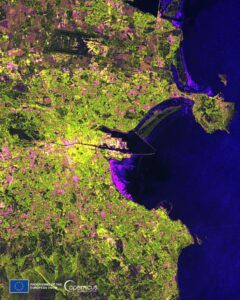
Flowing through the centre of the city is the Liffey, not a large river by any means. The Convention Centre is in the Docklands area of the city and sits right at the river front. It is right in the middle of the satellite image to the right.
Our city is served by buses, trains, trams, ferries, taxis and horses and we will tell you all about transport here in due course. You could conceivably get a ferry right into Dublin Port and then a short taxi or bus journey would take you to the Convention, but I don’t think you would want to do that!
For now, I hope this very brief description of Dublin encourages you to come here in August of 2029. But if you have any doubts, we hope to remedy that with an enticing journey over the next few years through our City!
One last thing … if you are a native Dub or a long-time resident, you may have skimmed quickly through this post. But there is something odd about the banner photograph at the top. Can you figure out what that is? There is no prize other than basking in your own cleverness.