
Dublin, Ireland and the Inspiration for Dracula
We have talked already in our blog about Dublin as a city of literature and the wide variety of speculative and fantastical fiction that this city has produced and inspired. In this context, the most familiar Dublin name is probably Abraham ‘Bram’ Stoker, renowned as the author of Dracula, one of the defining modern horror novels, indeed in many ways a defining modern novel.
Stoker was born in 1847 on the 8th of November, tomorrow’s date. Like all the best Dubliners, he lived on the Northside of the city, in a short but attractive street called Marino Crescent. This street is claimed by three districts; Marino (of course), Fairview and Clontarf. If you look at it on a map you can judge for yourself which has the greater claim. He was born in 1847 and at this time, the once-tiny village of Clontarf was gradually becoming an affluent suburb of Dublin. It was linked to the city by road and later by tram and by rail.
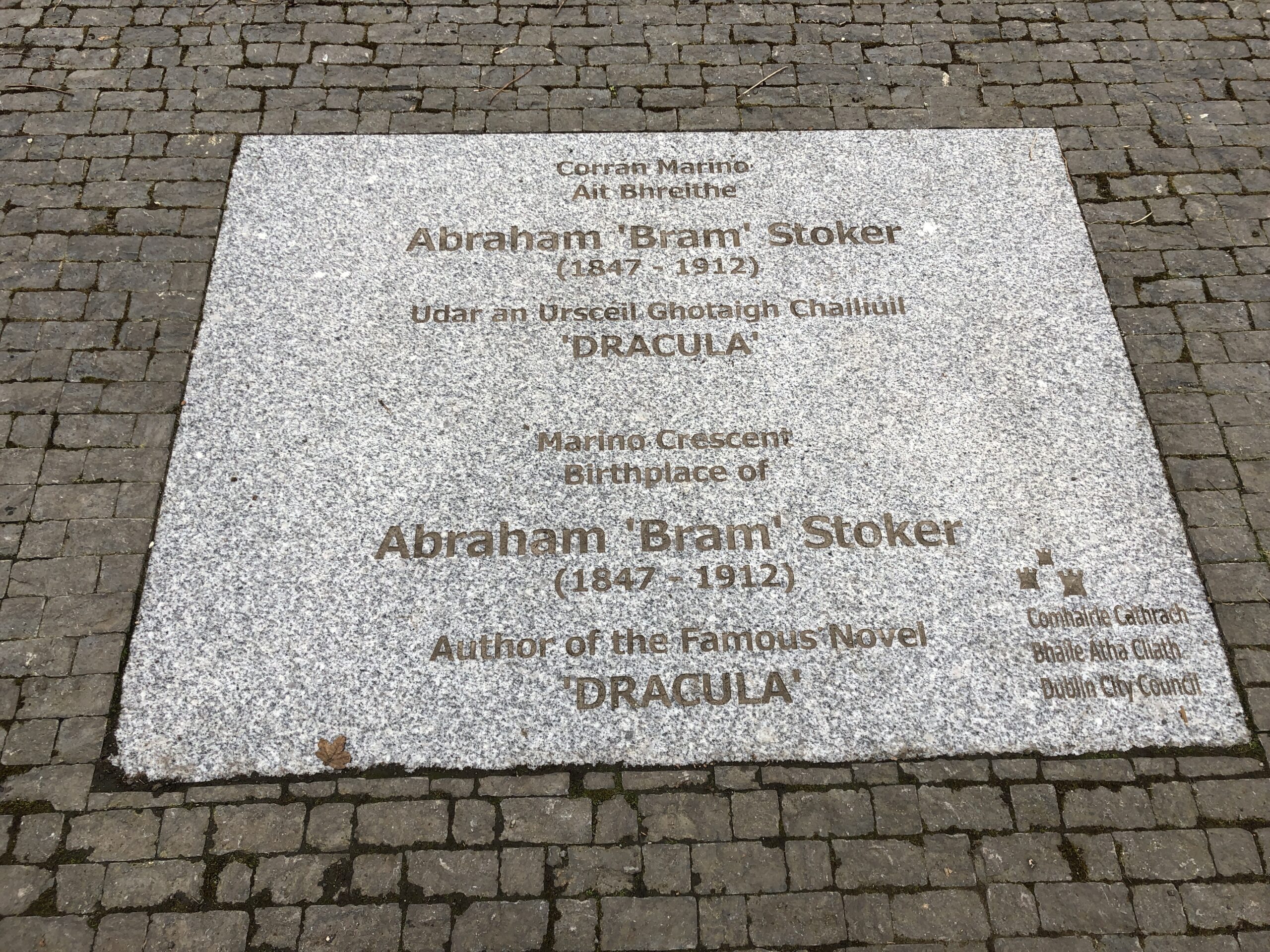
We will talk about the life of Stoker in a later post on this blog, but the purpose of this post is to discuss some possible sources of inspiration for the novel Dracula in the places where he lived and grew up. Scholars have looked at the life of Stoker to see what inspired the extraordinary character of Count Dracula and the depiction of vampires in his work, in part motivated by the fact that he never visited Eastern Europe, nor was he known to have talked to many people from there about vampire lore. Indeed it is debatable whether the figure of Dracula corresponds at all well to eastern European folkloric descriptions of the vampire. So I will offer you some local flavour here in the search for Stoker’s inspiration. Do please be aware that when talking about these ideas, some unpleasant and possibly upsetting material may come up.
The Grim Abhartach
The first question to ask is whether there are any Irish mythological figures or legends that Stoker may have drawn upon for the concept of the vampire. There is indeed – the Abhartach (using English orthography, this would be spelt avarttack). This creature was one of the Neamh-Marbh (Ne-av Mariv – the not-dead) and drew sustenance from the blood of the living. Its name is reflected in some placenames in the North West of Ireland, where the legend seems to have been particularly prominent. Notably this is a unique creature; it is not a set or tribe of beings that replicate in some way, but rather an individual.
According to some versions of the legend, this loathsome revenant was dispatched by a chieftain called Uí Cathain (O Ca-hain) with a sword made of yewtree wood. To prevent its return, it was buried upside down with a large rock on top of the grave. Finally, thorns were planted around the grave. As an interesting aside, some sources say that Uí Cathain learned this procedure from a Druid, others say that the druid’s advice was useless and it was only when he consulted a Christian saint that he learnt the proper course of action. For myself, the idea of burying the revenant upside down and planting a big rock on top of it seems quite obvious, but who am I to judge my ancestors? I have enough trouble with a garden hoe, never mind swords made of yew.
When looking for a connexion between Stoker and this legend, recall that Stoker’s mother was raised in Sligo town, in that North West region where the legend is especially prevalent. Many of their household staff also came from Sligo and its surrounds; this is significant in that young Abraham was quite ill as a child and was nursed by a servant from Sligo. It is possible that she may have told him stories along the lines of what I have outlined here.
Famine and Disease
There is a less fanciful, darker possibility to explain the sense of dread and fear Stoker brought to Dracula and some elements of the vampire idea as written by him. Stoker was born in 1847, the year when the Great Irish famine entered its most devastating phase. The north west of Ireland, including Sligo, was heavily affected by this famine. As a child in the following decade or so, he may have heard his family employees talking of mass graves, cholera outbreaks, groups of emaciated peasants wandering the countryside and other terrible sights from a famine of that magnitude.
In the midst of modern discussions of this shattering event, which usually centre around political, economic and societal issues, it is easy to forget that this was first and foremost a human catastrophe with an immense medical and psychological impact, like any famine we see today. The impact and fear of diseases associated with severe malnutrition such as cholera would have been fresh in the mind during the decades after the event itself. It seems possible that hearing memories like these would have made a big impact on the thoughtful and introspective young Stoker, perhaps driving his inclination to the macabre.
A Crossroads Close to Home
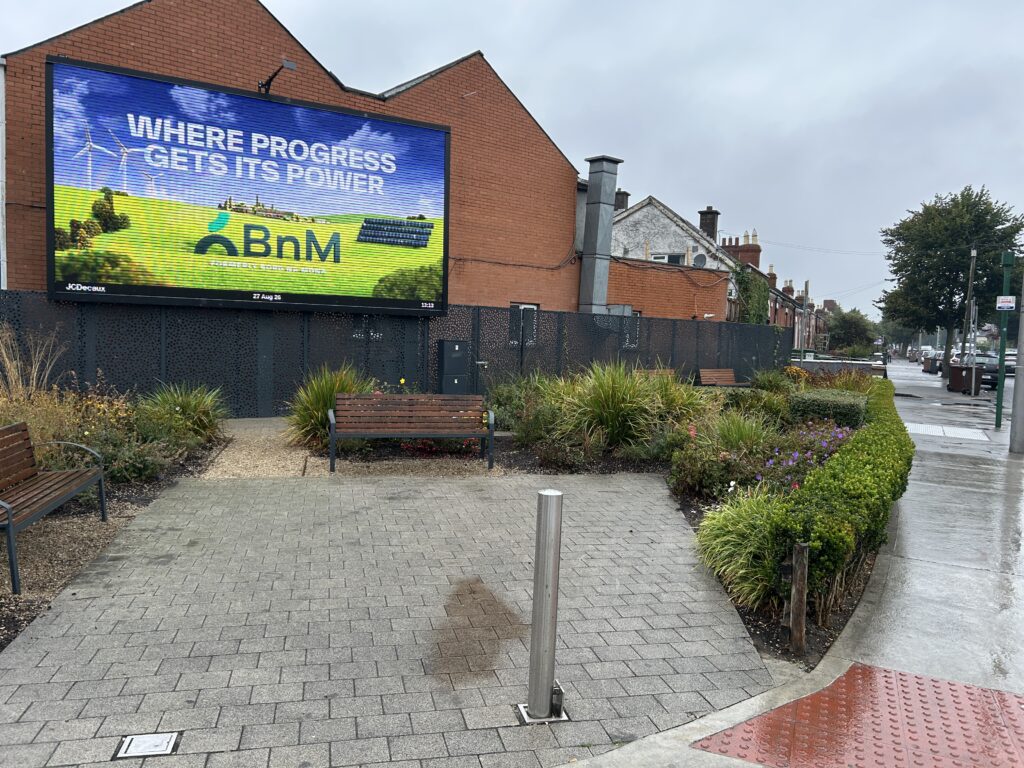
Another potential source lies in Stoker’s life in Dublin. When the youthful Abraham was living in Marino Crescent, any journeys into Dublin City Centre would have passed down what is now called Ballybough Road. Not long after passing through Fairview, the traveller comes to a crossroads with the Clonliffe Road. Local legend has maintained, for at least a century if not more, that this intersection held a ‘Suicide Plot’, that is to say, an unconsecrated graveyard for those who died by their own hand. Stoker would have seen this plot frequently, if it actually existed. As far as this local is aware, no archaeological digs have ever taken place on this site, nor have builders or infrastructure workers ever found evidence of a pre-existing cemetery to my knowledge. It is possible that I have recycled and fed you pure myth or unfounded conjecture by mentioning this. And yet… The corner where the cemetery allegedly stood has very recently been turned into a very pleasant little garden, though marred by a giant advertising board. For myself, I find that if I pass this spot early in the morning on a weekend, when the traffic is light and the gurriers are still in bed, this garden gains a solemn and even sombre atmosphere at odds with its usually busy location.
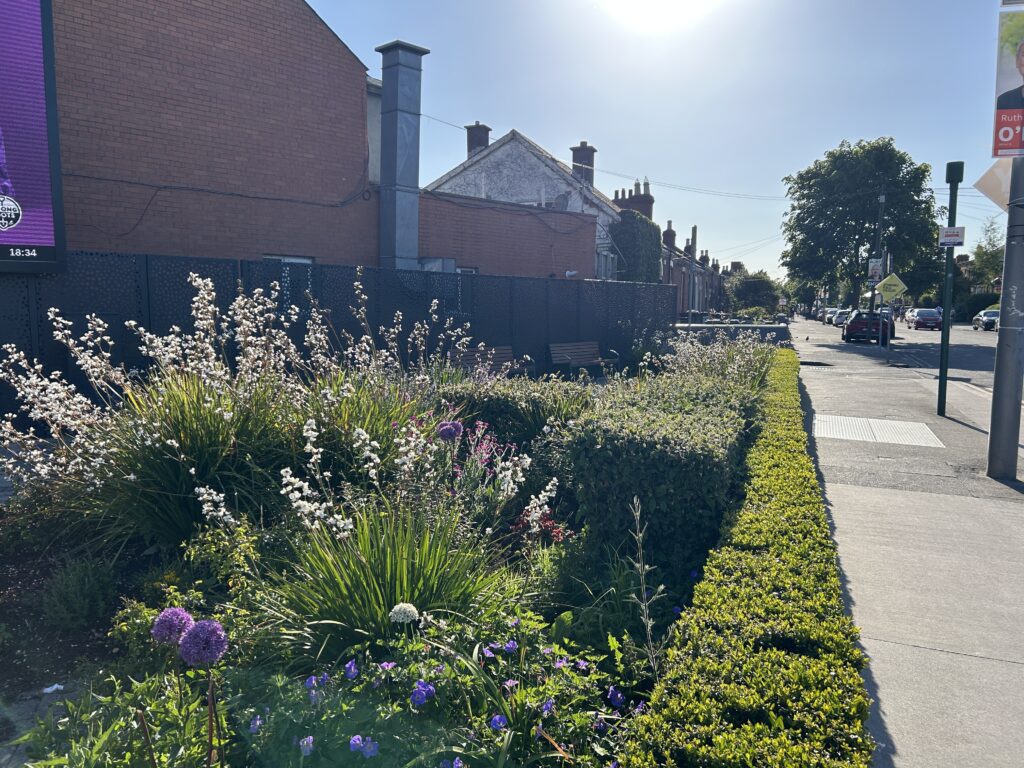
When you come to Dublin, you can visit this garden and Stoker’s birthplace quite easily. The very route from the city to this crossroads and the area of Ballybough and on to Stoker’s home in Clontarf is a short one; the districts and streets I have mentioned here are no more than a 30 or 40 minute walk or a short non-rush-hour bus journey north of the Convention Site. Should you become thirsty while tripping out here, have a sup in Gaffney’s, Meagher’s, Kavanagh’s or the Strand house; all are fine spots and the latter two will also feed you at a very reasonable price.
Confinement, Prisons and Renfield
Like the supernatural elements in the book, we can also look in Stoker’s own life for the distinct tone and atmosphere of Dracula and possibly the inspiration of one of the most memorable characters in the book, R.M. Renfield.
When Stoker was in his sixties, he reflected in his memoirs on many of his own habits and interests, saying that he had ‘always made it a practice to visit jails, asylums, hospitals, manufactories, and all such centres of special effort’. This refers to the time when he moved to London, at the age of thirty, and was a frequent visitor to Millbank Prison. His friend Henry Irving had introduced him to Captain Wickham Talbot Harvey, the governor of the prison, which made this possible. Much of the Victorian analysis of that penal system and their methodologies in the design and building of the prisons such as Millbank were part of an attempt to deal with criminality on a scientific basis. We may now find it odd or even unacceptable, but in the late 19th century, those who felt engaged with the scientific and societal issues of the day, including the penal system, visited prisons and ‘lunatic asylums’ as part of this outlook.
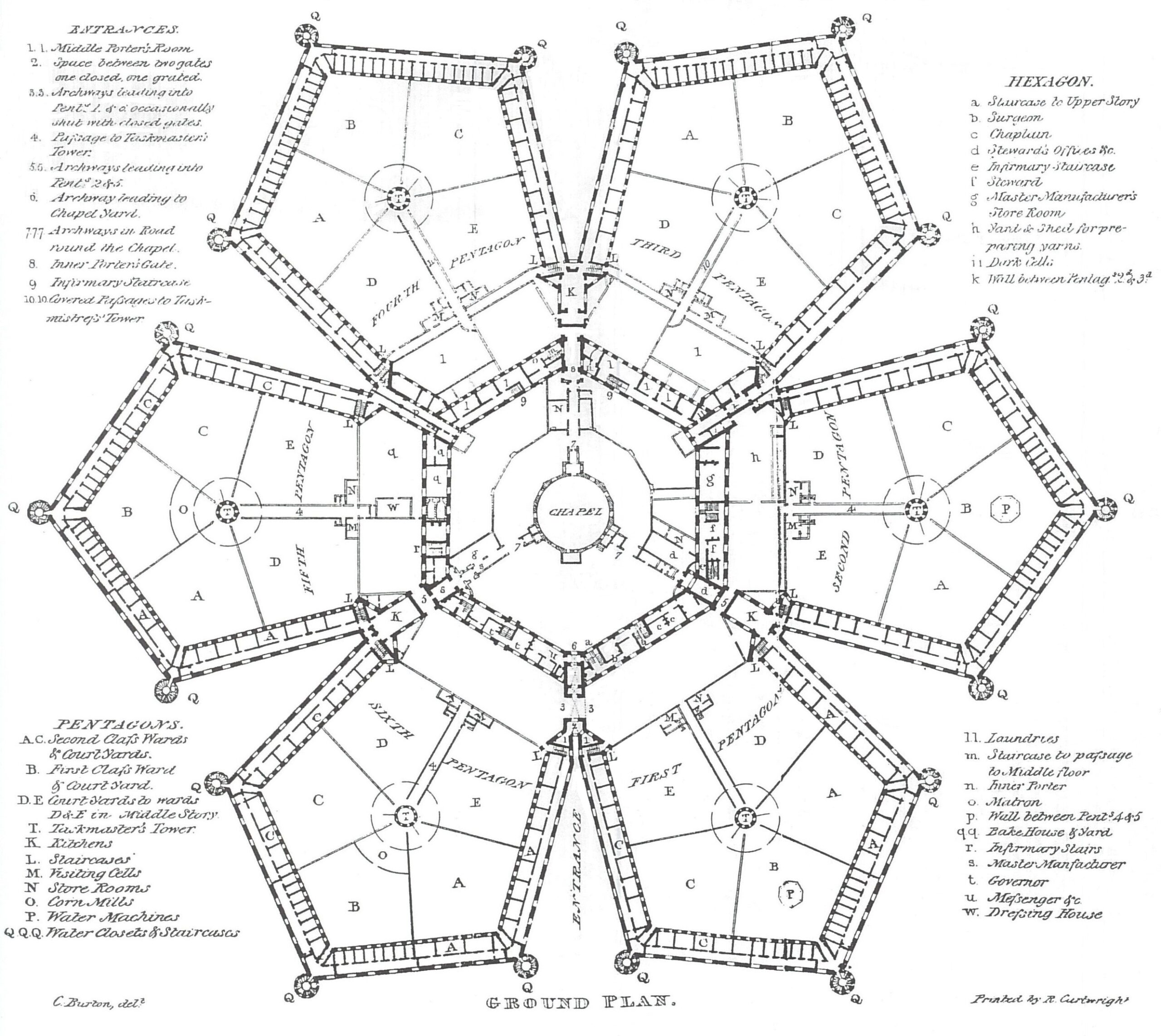
Stoker’s visits made a powerful impression on him, that is clear from his memoirs, but it is also the case that throughout the novel Dracula we see depictions of confinement. Early on, Jonathan Harker is memorably unable to escape the Count’s castle:
“But I am not in heart to describe beauty, for when I had seen the view I explored further; doors, doors, doors everywhere, and all locked and bolted. In no place save from the windows in the castle walls is there an available exit.
The castle is a veritable prison, and I am a prisoner!”
In the same vein, Harker rails that:
“It makes me rage to think that this can go on, and whilst I am shut up here, a veritable prisoner, but without that protection of the law which is even a criminal’s right and consolation.”
On one occasion, Harvey introduced Stoker to an Irish prisoner; this appears to have been a violent, repeat offender named Francis Milrennie who had been imprisoned under the name Alexander Brown. Harvey asked him where in Ireland he had been and the prisoner claimed only to have been in Ulster, where he claimed to be from, and the south of the island. He denied ever having been in the western districts. Yet Stoker immediately said he recognised his accent as being from Sligo, which had a powerful and subduing effect on Browne/Milrennie. Stoker recall that:
“The man almost sprang back, white as a sheet and with a brutal look in his eyes. But in a few seconds, he had recovered himself so far as to begin a long rambling pointless statement with the Ulster inflection of voice.”
In encounters such as these, Stoker may have found inspiration for the character of Renfield. He is a fanatically devoted servant to Count Dracula and helps him in his efforts to turn Mina Murray, later Harker, into a vampire on the promise of his being given immortality. Throughout the novel, he resides in an asylum, where he is treated by Dr. John Seward, a friend of Jonathan Harker. With Renfield, Stoker is showing a man powerfully affected by that desire for immortality and thoroughly under the control of the Count. Only at certain points do we see him break free of that control, at which points his conscience torments him. These distinctive shifts in personality and his unreliable or distorted perception of the world are set out in his rambling monologues and show in his obsession with life and the consumption of living things like the insects he finds in his cell. As I said above, a distinct and memorable character.
Conclusions?
Much of what I’ve discussed here has been speculation, urban folklore or simply the background to Stoker’s life, along with some exploration of his interests. I would be reluctant to say with any certainty that any of it is a definite source or inspiration for a particular element of the novel. But I would suggest that one question has been answered – to understand the roots of this great novel, do we need to keeping looking for a volume of Eastern European vampire lore on Stoker’s shelves, or track down a meeting he had with someone from there who new the subject? The answer is no; we have the very ordinary notion that a well-educated man with access to much information on his time or place simply drew on his own life experience and interests and then, more importantly, used his own vivid imagination to create some of the most memorable characters and stories in all literature.
My thanks again to Prof. Catherine Cox of UCD School of History for her insights and especially for pointing to the material on Stokers interests in prisons and the character of Renfield. All wild inferences and speculations are my own.