
The purpose of this blog, indeed of our website, is to bring Speculative Fiction and Fantasy to Dublin and to bring Dublin to SFF. To this end, every once in a while, we will talk to you about writers, artists and other creatives and such of their works that are closely or even peripherally associated with our city. There are perhaps more than you might think! We will start with a writer who needs no introduction to fans of science fiction, fantasy and horror – Ray Bradbury.
Bradbury is one of the most celebrated writers of the 20th century from mainstream or genre fiction and his significance arguably lies in his transcending those genre divisions. Bradbury was also an accomplished screenwriter, his first major work being the science fiction film ‘It Came from Outer Space’. This was notable for its sympathetic treatment of aliens who appear monstrous to the humans they encounter, a theme which still resonates today. As Barack Obama said on the news of Bradbury’s death, he “understood that our imaginations could be used as a tool for better understanding, a vehicle for change and an expression of our most cherished values.”
Bradbury famously worked with director John Huston, writing the screenplay for the film ‘Moby Dick’. Huston had decided to film the New Bedford scenes of the story in Youghal, on the south coast of Ireland, and prevailed upon Bradbury to come to Dublin to do his writing during this period.
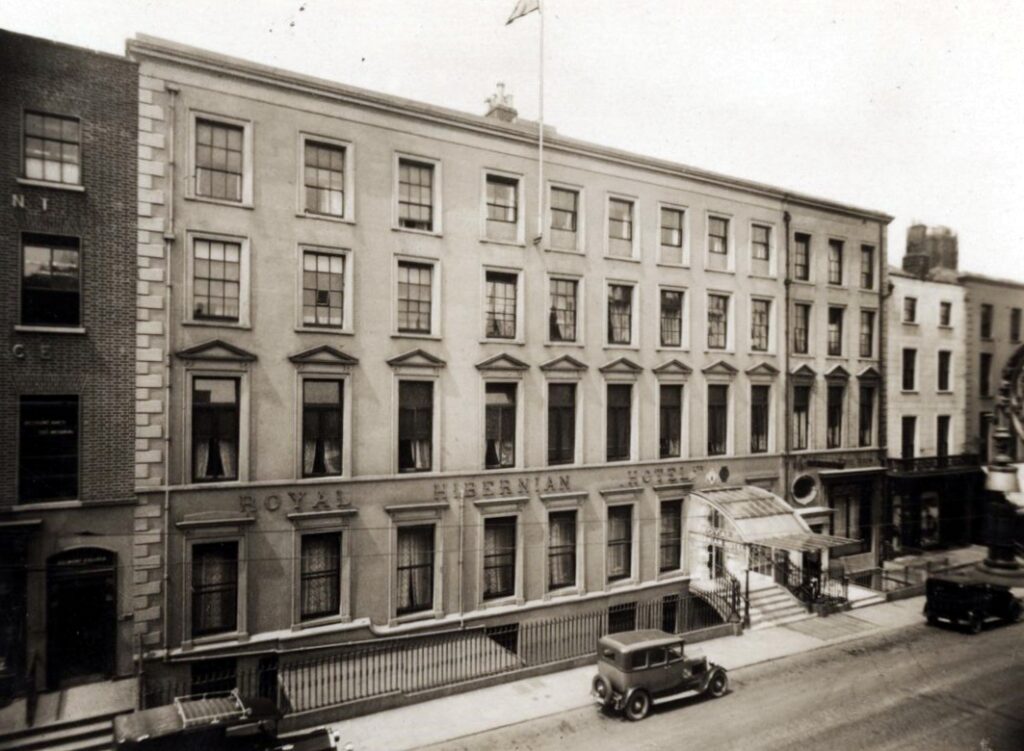
Bradbury moved here in October 1953 and took up residence with his family and their nanny in the luxurious Royal Hibernian Hotel, which was located on Dawson Street. This was quite a famous hotel, noted for its haute cuisine. It was possibly Ireland’s oldest hotel, having been established in the 1750s. While there, the Bradbury retinue had one habit familiar to anyone who has met Americans in an Irish hotel – they jacked up the heating as much as they could to stave off the damp and cold! The hotel is long gone; it closed in the 1970s, the beautiful building a casualty of Dublin’s frenetic destruction of its architectural heritage in the 1970s and 80s. It was replaced by ‘The Royal Hibernian Way’, an office block and upmarket shopping area which allowed for pedestrian access between Dawson Street and Grafton Street. It’s a pleasant spot despite the brutalist concrete look.
Bradbury left Dublin in mid-1954, after a few months. While his stay made a big impression on him, it is unclear how much he actually enjoyed it. He had a tumultuous relationship with Huston and seemed to find it difficult to adjust to what would have been quite a different culture and society for a resident of southern California.
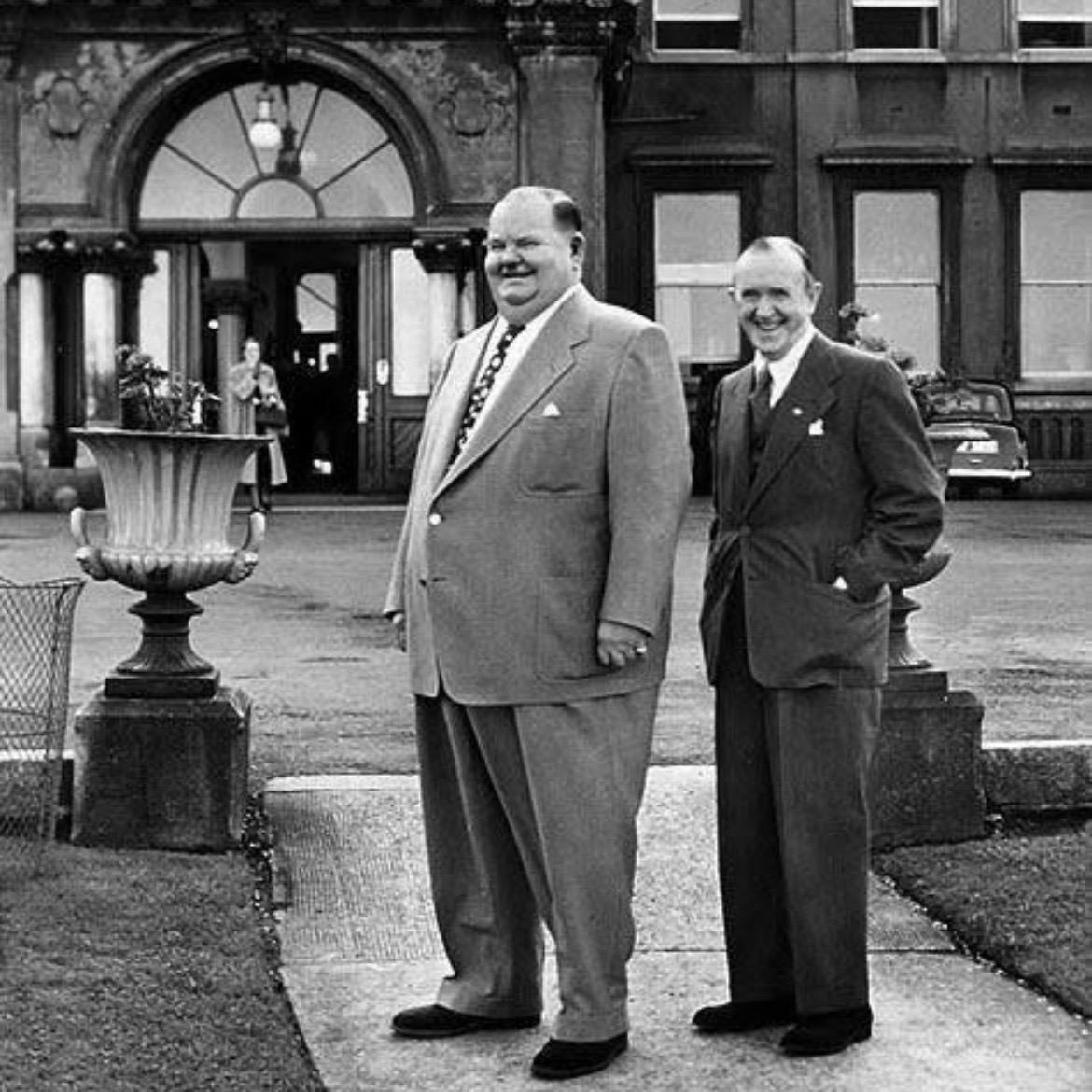
There was one event during his time in Dublin that we can have no doubt that he enjoyed – the visit of Laurel and Hardy to Britain and Ireland in 1953 included one performance on 11th October in the Olympia Theatre This was arranged at the last minute and Bradbury allegedly got the last ticket! He was of course a long-standing admirer of the pair and hugely enjoyed the performance. He went backstage to see them though did not introduce himself, being content to soak up the atmosphere.
You can judge for yourself how Bradbury felt about this period of his life with his ‘Irish Stories’; they are found throughout his collections and several of the tales were reworked (as was his habit) and brought together in the semi-autobiographical novel ‘Green Shadows, White Whale’. Opinion is varied about these works; although they were highly praised by some, it seems that reviewers with links to Ireland were less favourable. Thomas Flanagan (sic), writing for ‘The Chicago Tribune’, said “All of his Irish characters talk like Barry Fitzgerald reciting Seán O’Casey to a busload of tourists from Tulsa.” That is a damning indictment for myself as a Dubliner, but yet … I can still remember reading a charming story called ‘The Anthem Sprinters’ in an Irish magazine in the early 80s. The story revolves around film-goers who depart a cinema in a hurry before they are delayed by the playing of the national anthem. Teenage me was delighted to find that the writer was the same chap who wrote ‘The Martian Chronicles’, one of my favourite SFF works. That magazine, whose name I have utterly forgotten, published the story because of its connexion to Ireland of the 1950s, but of course we were far from the only country playing our national anthem at cultural events at the time. In many ways, that catches the mix of the universal and the particular that is one of Bradbury’s strengths.
My thanks to Bradbury scholar Dr. Phil Nichols for much of the information in this piece. Phil writes about Bradbury’s sojourn in Dublin here: https://bradburymedia.blogspot.com/2008/03/bradburys-dublin.html
My information on the Royal Hibernian Hotel comes from an article by Dr Máirtín Mac Con Iomaire, taken from his PhD thesis and available here: https://arrow.tudublin.ie/cgi/viewcontent.cgi?article=1003&context=hibhot