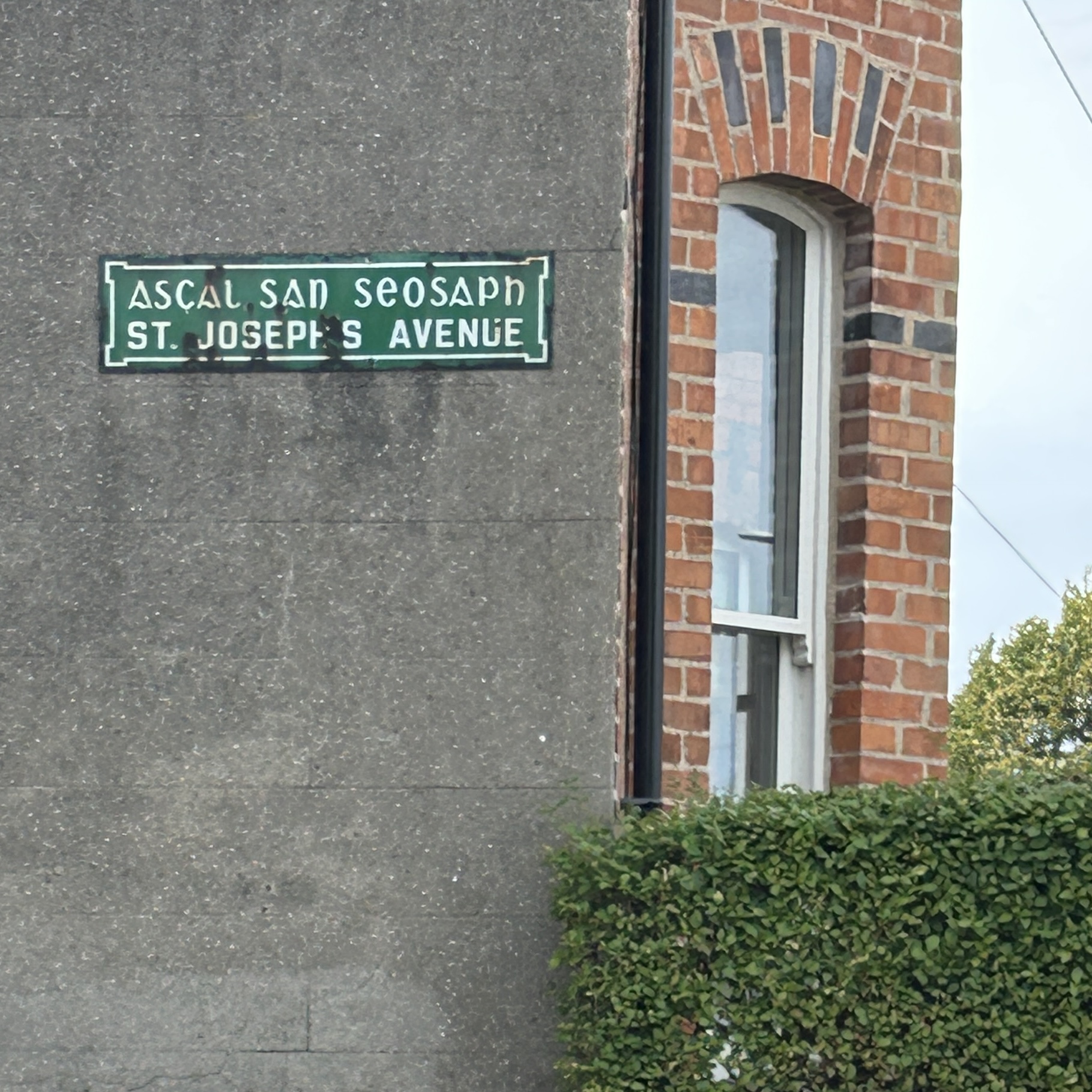
When you first come to Ireland, as soon as you step off your plane or boat and enter a building (or possibly as soon as you boarded that plane or boat!) you will have seen notices and signs in two languages. One is clearly English, the other being the Irish language. Here I’m going to briefly explain its position and importance in Ireland; its cultural significance, its legal status and so on. In later posts, we’ll introduce you to actual words and phrases that you are likely to encounter during your stay – you have already met one of them on this website and in this blog; the ubiquitous word ‘fáilte’, meaning ‘welcome’.
Irish is a Celtic language. It is very closely related, to the point of mutual intelligibility, to Scottish Gaelic, the language of the Highlands and Islands of Scotland. These two languages are related in turn to Welsh and Breton – these are again a pair of very closely related languages. These two language groups form the Celtic family of languages and in the past, the family included an enormous variety of other languages in mainland Europe. The Celtic languages are in turn part of the wider Indo-European language group that includes this English. Here are some basic facts about the language to set you up for any possible encounters with it during a trip to Ireland.
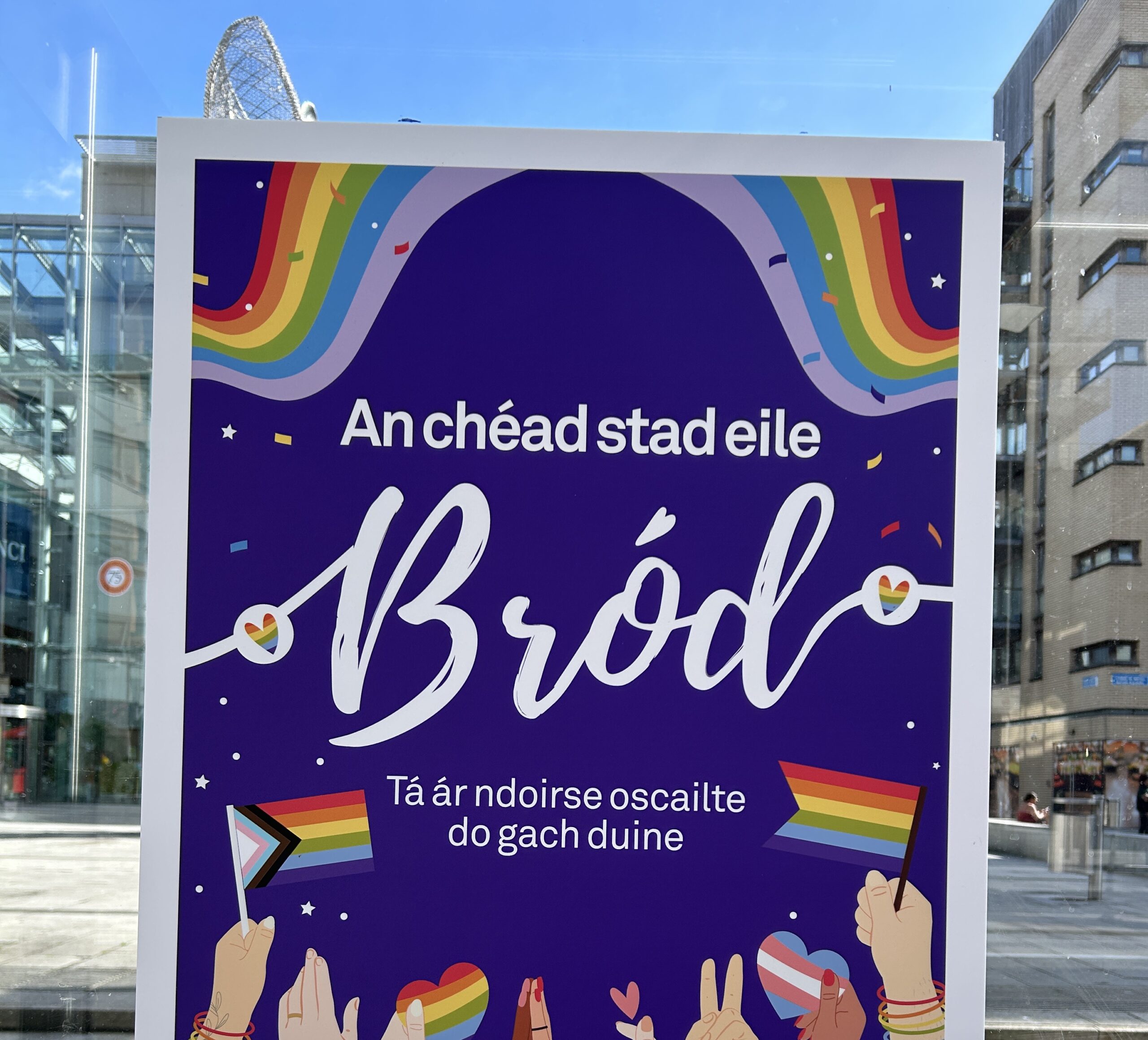
Firstly, there is the name. In its own words, our language calls itself ‘Gaeilge’; for example, the phrase ‘An bhfuil Gaeilge agat?’ means ‘do you speak Irish?’ This literally means ‘do you have Irish?’ and is pronounced On will gale-ga agut?
This word ‘Gaeilge’ (or more accurately, older forms of this word) is transliterated into English as Gaelic, pronounced ‘gay-lic’, so throughout the anglophone world the language we are talking about is called Gaelic, or sometimes Irish Gaelic to distinguish it from its Scottish cousin. However, within Ireland we tend to call it ‘Irish’. This is slightly controversial, as it implies that it is the only true native language and that English, even Hiberno-English, is implicitly foreign. Make of that what you will. More practically, if you hear Irish people discussing Gaelic, they are probably talking about Gaelic football, one of our national sports. You will be hearing about this later!
The Irish language gains its prominence in Irish life for several linked reasons. Firstly, it was once the overwhelmingly dominant language on this island, up until the 16th century, and was still very widely spoken, including in Dublin, until the 19th century, at which point it was essentially replaced by English in most contexts. Secondly, with the establishment of an Irish state in modern times, its place is defined in our constitution as our national language and the first official language, with English as the second. Finally, it is quite simply very important culturally and symbolically to many Irish people, irrespective of whether they speak it well or just have a ‘cúpla fhocail’ (this means ‘a few words’, pronounced coo-pla uckal).
When you look at an Irish word or phrase as a native speaker of another language, the apparent sound of those words may seem odd or even ugly. This is especially true if you are using English phonetics, that is to say, the sounds letters make. Here is a very well known and simple example – the name Seán. I have heard some anglophone people pronounce this as it looks in English, so it comes out as sounding like see-an or see-on. But you probably know that it is pronounced like Shawn and indeed that is one form in which the name is rendered with English phonetics. The key to unlocking the pronunciation is that the letter ‘s’ at the start of a word is often pronounced like ‘sh’ and the accent on the ‘a’ lengthens the vowel sound, hence sh-awn. That accent is called a ‘fada’, the Irish word for – you’ll never guess! – long.
This is just one example of the way in which the phonetics of the language need to be understood to see the correct pronunciation, or more basically, knowing that the language has an often radically different phonetic system helps explain how what look like oddly spelt words in fact have simple and elegant pronunciations. When we introduce you to important words, we’ll go through this with you.
For now, here’s a vitally important placename for you to know: Baile Átha Cliath.
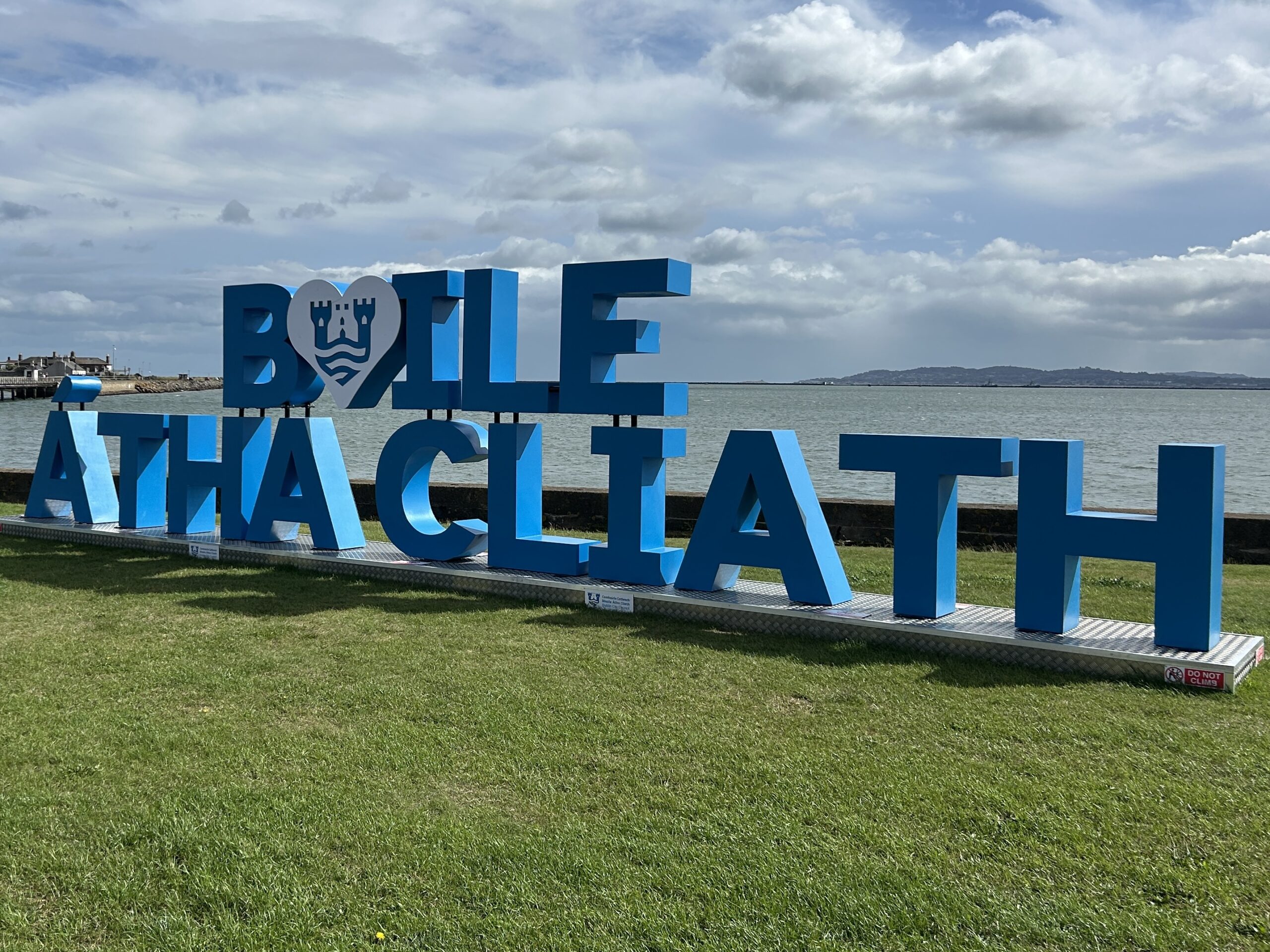
Where is this? The word ‘Baile’ is pronounced like Bawlya but with a short first syllable. it means town; many Irish towns have names starting with ‘Bally-‘ and now you know why! The word ‘Átha’ is pronounced like aw-ha. It is the genitive case of ‘Áth’, which means a ford on a river. Finally, ‘Cliath’ means ‘hurdled’. Thus I am talking about the Town of the hurdled ford. This is in fact the Irish name for Dublin, deriving from the name of one of the two ancient settlements founded on sites where the geographic centre of Dublin lies now.
You will no doubt be asking how this became Dublin… this name came from the other early settlement on the Liffey, which was called ‘Dubh linn’, pronounced like dove-lin. This name means dark tidal pool. This was a settlement at the junction of the Liffey and another river called the Poddle. The Irish placename has evolved over time; back in the 9th century, the Vikings who settled here heard Dyfflin and from there, it passed into Nordic languages, Norman French, old English and then into modern English as Dublin.
So there you have the briefest of brief introductions to Irish Gaelic, its cultural relevance and the most important placename you will encounter. In later posts, we will talk to you about the history of the language, some more Irish words and phrases and some more place names. We will definitely come across the latter when we tell you about the streets, districts and suburbs of Dublin, some nearby towns and other places even further afield. The overwhelming majority of placenames on this island come from original Irish names, so there are many stories and tales to tell, tall or not, to explain their origins.